Essential Donabe Seasoning and Care Tips for Perfect Cooking
- Darrell Baum
- Dec 27, 2025
- 4 min read
Donabe, the traditional Japanese clay pot, is cherished for its ability to cook food evenly and enhance flavors. Whether you are simmering a hearty stew, steaming rice, or preparing a delicate hot pot, a well-seasoned and properly cared-for donabe can elevate your cooking experience. However, donabe requires specific seasoning and maintenance to ensure its durability and performance. This guide covers everything you need to know about seasoning and caring for your donabe to keep it in excellent condition and enjoy perfect meals every time.
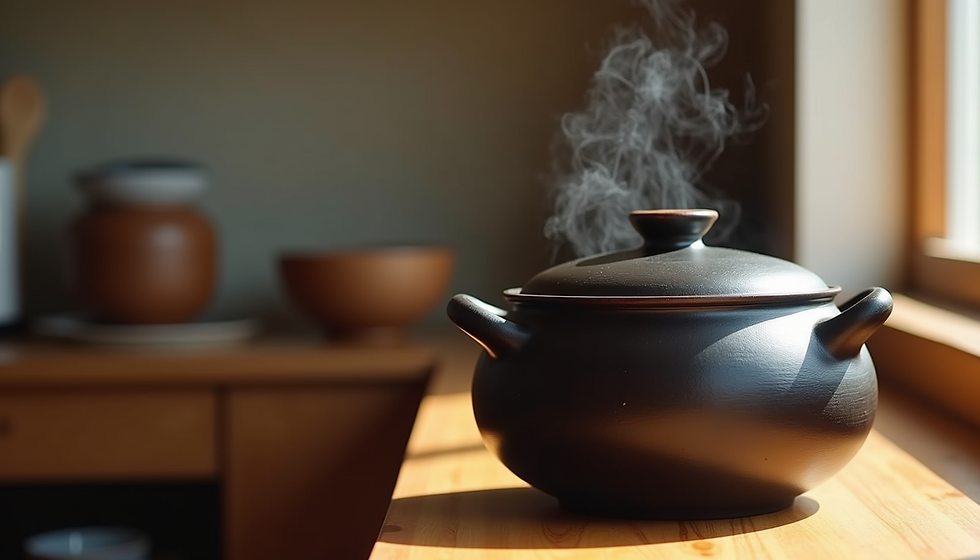
Why Seasoning Your Donabe Matters
New donabe pots are porous and fragile. Seasoning seals the pores, preventing cracks and leaks while enhancing heat distribution. Without proper seasoning, your donabe may absorb water and odors, leading to damage or unpleasant flavors in your dishes.
Seasoning also helps build a natural non-stick surface over time. This makes cooking and cleaning easier and protects the pot from sudden temperature changes that can cause cracking.
How to Season Your Donabe Step-by-Step
Seasoning a donabe is a simple process but requires patience and care. Follow these steps to prepare your pot for first use:
1. Rinse & Soak
Rinse the pot and lid with water. Fill with water and soak for about 30 minutes.
2. Make Rice Porridge (Kayu)
Fill the donabe about ¾ full with water and add ½–1 cup of cooked rice (leftover rice works especially well).
3. Simmer Gently
Place over low heat only and simmer gently for 30–40 minutes. Never use high heat.
4. Cool Naturally
Turn off heat and allow the donabe to cool completely to room temperature.
5. Rinse & Dry
Discard the porridge, rinse gently (no soap), and air-dry thoroughly.
6. Repeat if Needed
For new donabe, repeating the rice water simmering process 2 to 3 times improves seasoning and durability.
Daily Use Tips to Protect Your Donabe
Once seasoned, your donabe will perform beautifully if you follow these daily care tips:
No Prolonged Soaking
Do not soak the donabe or leave it filled with water or food for extended periods. Excess moisture can weaken the clay and cause odors.
Never Store with Liquid Inside
Always transfer soups, broths, or sauces after cooking—never leave liquids overnight.
Dry Completely Before Storage
Allow the pot and lid to air-dry fully (ideally overnight) before putting away to prevent mold or musty smells.
Avoid Sudden Temperature Changes
Donabe is sensitive to thermal shock. Always heat it gradually on low to medium heat. Do not place a hot donabe directly on a cold surface or add cold liquids to a hot pot.
Low to Medium Heat Only
Always start on low heat and increase slowly. Never heat the donabe empty.
Cook with Care
Avoid cooking acidic foods like tomatoes or vinegar-based dishes for long periods, as acidity can weaken the clay over time.
Use Wooden or Silicone Utensils
Metal utensils can scratch the surface. Wooden or silicone tools help maintain the pot’s integrity.
Cleaning Your Donabe Properly
Proper cleaning extends the life of your donabe and keeps it safe for cooking:
Hand Wash Only
Never put your donabe in the dishwasher. Use warm water and a soft sponge. Avoid soap or detergents that can be absorbed by the clay.
Remove Stubborn Residue Gently
For stuck-on food, soak the pot in warm water before scrubbing lightly. Use baking soda paste for tough stains but rinse thoroughly afterward.
Dry Completely
After washing, dry your donabe with a towel and leave it uncovered to air dry fully. Moisture left inside can cause mold or odors.
Storing Your Donabe
Proper storage prevents damage and odors:
Store your donabe in a dry, well-ventilated area.
Keep the lid slightly ajar or place a paper towel between the lid and pot to allow airflow.
Avoid stacking heavy items on top of the donabe to prevent cracks.
Troubleshooting Common Donabe Issues
Even with care, donabe can develop issues. Here’s how to handle them:
Cracks
Small hairline cracks are common but avoid using the pot if cracks worsen. Prevent cracks by avoiding rapid temperature changes.
Odors
If your donabe smells musty, soak it in a mixture of water and baking soda overnight, then rinse and dry thoroughly.
Stains
Stains from food can be removed with a gentle scrub using baking soda paste or a vinegar soak.
Enhancing Your Cooking with Donabe
A well-maintained donabe not only lasts longer but also improves your cooking:
The clay pot retains heat evenly, allowing slow cooking that enhances flavors.
The porous nature of donabe helps absorb and release moisture, keeping food tender.
You can use donabe for a variety of dishes: soups, stews, rice, steamed vegetables, and even desserts.
Final Thoughts on Donabe Care
With proper care, your donabe will grow stronger over time and provide years of beautiful, comforting cooking.

Why Donabe Are So Unique — Far-Infrared Cooking
When heated, the natural clay and glaze of a Banko ware donabe emit far-infrared rays. This gentle, penetrating heat cooks food evenly from the inside out, improving efficiency while reducing hot spots. Far-infrared cooking helps retain moisture, flavor, and nutrients—often at higher levels than cast iron, stainless steel, or aluminum—while requiring lower heat and shorter cooking time.
About Banko Ware
Banko ware donabe are made in Yokkaichi, a region with a ceramic history dating back to the 18th century. Originally known for tea wares, Banko ware evolved into highly regarded cookware due to its mineral-rich, heat-resistant clay. These donabe are prized for even heat distribution, excellent heat retention, and durability, making them an essential vessel in Japanese home cooking.


Comments